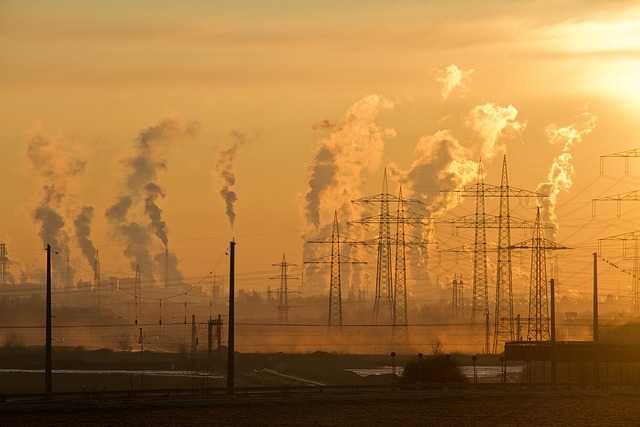
Carbon Capture Breakthroughs Are No Longer Just Hype
What used to be a pitch deck dream is now quietly becoming industrial standard. In 2026, the list of major energy companies running real, operating carbon capture systems is finally longer than the list of press releases announcing them. Shell, BP, and several state backed firms across Asia and the Middle East have scaled up infrastructure that’s removing millions of tons of CO₂ annually not theoretically, but in practice. These aren’t pilot projects anymore.
Tracking reduction metrics is more sober now, too. We’re seeing verified, independently audited data showing measurable progress. According to this year’s IEA report, roughly 43 million metric tons of CO₂ were pulled from the atmosphere via capture and storage in 2025 nearly double the year before. While that’s still a blip on the climate radar, it’s enough to prove scalability when done right.
So, why is 2026 shaping up as the tipping point? Two things: market pressure and regulation. New emissions caps in the EU and carbon incentives in the U.S. are pushing companies to clean up or pay up. And after years of investor scrutiny, companies are more willing to bank on tech that delivers not just looks good in a sustainability report. It’s not “greenwashing” if the numbers hold up. The industrial shift has started. The real question now is speed.
Oceans Set New Heat Records Again
2026 continues a troubling streak sea surface temperatures have shattered previous records. Across the Atlantic, Pacific, and Indian Oceans, surface level warmth has climbed well past projections. Scientists are calling it a thermal surge, with some regions posting monthly averages up to 2 degrees Celsius above expected norms.
The implications go beyond bathwater warm beaches. Coral bleaching is hitting harder and faster, dismantling ecosystems that support a huge range of biodiversity. Warmer waters also mess with migration cycles, throwing marine food chains out of sync. Fisheries are struggling to adapt as once reliable patterns dissolve. There’s no tidy fix here just a growing list of questions.
And it’s not just under the surface. Ocean temperatures drive weather, and this year’s spike is already being blamed for stronger hurricanes, shifting monsoon patterns, and extended drought in places that depend on ocean regulated rainfall.
What’s jarring: ten years ago, climate models warned of this, but most predictions thought we had more time. Instead, the speed of change is outpacing what the graphs said. Surface heat ceilings are breaking earlier and higher than forecasted. It’s a stark reminder that the ocean is not a buffer it’s a mirror, reflecting back everything we’ve done to the planet, faster than we thought it would.
Global Reforestation Hits Critical Milestone
Tree planting isn’t just a feel good marketing tool anymore it’s big business and serious climate strategy. In 2026, reforestation efforts backed by both corporations and grassroots movements have reached scale. From startups planting a tree for every order to national policies enforcing regenerative land use, trees are becoming one of the more visible answers to carbon drawdown.
What makes this moment different? Satellite imagery gives it away. Forest cover is measurably expanding in parts of South America, including Brazil and Colombia, and across multiple regions of sub Saharan Africa. These gains aren’t just numbers on a screen they’re dense enough to support ecosystem recovery. In some areas, previously dwindling species have started to come back, with experts linking this directly to rising forest density and healthier microclimates.
The key: coupling local involvement with global support. Tree planting that sticks isn’t done overnight, and 2026 proves that with the right partnerships, it doesn’t have to be a pipe dream either.
Climate Policy Gets Teeth After 2024 Agreements

After years of talk, 2026 is finally the year climate policy starts to bite. Countries that signed the 2024 agreements are now enforcing the promises they made some for the first time. That means real consequences for companies and industries that drag their feet.
Carbon pricing mechanisms have rolled out across major economies. It’s no longer just a bureaucratic note businesses are paying for emissions with actual cash. Border tax adjustments are also kicking in. If your goods are dirty, you’re paying extra at the border. And green tariffs? They’re real now Europe, parts of Asia, and even a handful of U.S. states are using them to level the playing field.
The language has shifted from ambition to accountability. Countries are publishing emissions audits. Corporations are pivoting to avoid penalties. And yes, there’s plenty of pushback but the direction is clear: climate compliance isn’t optional anymore.
See the climate summit takeaways for deeper policy background.
Renewable Energy Storage Levels Up
After years of being the weakest link in the renewable chain, battery technology has finally caught up. Storage systems in 2026 are not just bigger they’re smarter, cheaper, and scalable enough to balance the grid day and night. This isn’t theoretical anymore. Commercial scale batteries are now deployed alongside solar farms and wind arrays at a pace that matches generation capacity.
The other shift? Community microgrids. What started as local experiments in resilience have gone global. In California, neighborhoods decouple from the main grid during high demand peaks. Along India’s coast, fishing villages power clinics and schools overnight using stored solar from midday. These networks are tough, decentralized, and getting easier to install.
The result is no small feat: energy storage has lost its bottleneck title. With widespread adoption and investment, it’s now the backbone of clean grid reliability not the obstacle. For the energy transition, that changes everything.
Climate Migration Hits New High
According to the latest UNHCR data, global displacement has reached yet another record. Climate driven migration now accounts for a growing slice of those numbers floods, droughts, and extreme heat are pushing families out of their homes in every region. What’s different in 2026 is both the scale and the speed. Entire communities are moving, not just individuals.
In response, some countries are putting quick build relocation infrastructure in place modular housing, mobile healthcare, education pods. But these are stopgaps. Long term resilience needs more than tents and check ins. It means integrating migrants into host economies, building climate adapted cities, and supporting impacted regions before people are forced to leave.
Still, it’s not just logistics. Social and political friction is starting to show in receiving areas. Rising housing costs, job scarcity, and resource pressure are fueling backlash, especially in places already under strain. Governments face a balancing act: protect social cohesion while honoring climate commitments and humanitarian duty. Expect this tension to become one of the defining challenges of the post 2024 climate era.
What to Watch for in the Second Half of 2026
The second half of 2026 brings more than just warmer temperatures. With key elections on the horizon in the U.S., EU, India, and Brazil, environmental regulation is entering a potentially volatile phase. Campaign platforms are sharply split some doubling down on green policy, others pushing for rollback. Expect disruptions in legislation, funding, and enforcement as political winds shift.
Meanwhile, the third quarter will release new polar ice measurements. Early models suggest accelerated melt rates in Greenland and segments of West Antarctica. If the projections hold, sea level expectations will be revised again and not in a favorable direction. Urban planners, insurers, and coastal developers are on high alert.
From a global perspective, the climate commitments forged in 2024 are being tested in real time. Nations are starting to course correct based on implementation results and lagging progress. The international community is watching closely and adjusting targets where momentum falters.
More context on long term policy direction can be found in the climate summit takeaways.